Activities for this chapter:
- What is the most important thing to remember about Islamic art? Why is calligraphy so important in Islamic art?
- some reasons why Arabic is so difficult (https://shirhashirim.wordpress.com/2008/02/12/square-kufic/):
Imagine having to write without vowels, wld y stll b bl t rd wht y wrt? This is what Hebrew and Arabic (and a few other scripts) do. You have to know the language already before you can read it. Reading in these languages is recognising the text, rather than reading it. In the old days, we’re talking 7th century here, the Arabic script was even more defective. Imagine the letters for b, t, th, n and y being exactly the same as well as the letters for s and z, v and w, b and p, g and k or ng. The starting sentence of this post would look something like this:
Mgb hvg b vrb vbb vvls, vld b sbll b bl b rd vhb b verb?
The author concludes that this "defect" facilitates beautiful calligraphy, here are some other theories on why Arabic is difficult to read and speak: http://www.slate.com/articles/arts/culturebox/2005/06/im_trying_to_learn_arabic.html, https://www.sciencedaily.com/releases/2011/05/110518080109.htm.
If it is true that in reading Arabic one is recognizing words rather than reading them--does this change the way one relates to the text? Kufic squares and other forms of Arabic calligraphy can be so abstracted that usually only simple and very recognizable words are used to make them, otherwise even native speakers of Arabic might not be able to read them. eL Seed mentions that he wants viewers to understand his calligraphy without necessarily reading it. Does transcending from the textual meaning of a calligraphic artwork help to express religious transcendence? What other cultures use calligraphy to express transcendence?
- watch some videos on Arabic calligraphy art by eL Seed:
- reed pens or quills (qalam in Arabic) were the most common writing implement in antiquity, feather quills came after (https://en.wikipedia.org/wiki/Reed_pen), here is a video on how to make a one:
reed pens can also be made out of a plastic straw or metal cut from a can:
reed pens can be also used to make Blackletter Gothic script:
here is an easy tutorial on Blackletter Gothic script: https://calligraphypen.wordpress.com/tag/blackletter/, and a few other ones: https://design.tutsplus.com/articles/mastering-calligraphy-how-to-write-in-gothic-script--vector-25929, http://www.calligraphy-skills.com/how-to-write-calligraphy.html, http://www.dancingpencalligraphy.com/howto/BlackletterLesson.html
- we will be using highlighters--cheapest calligraphic markers you can buy! practice holding the markers and making straight lines, circles, checkerboard, and diamond shapes (http://imgur.com/gallery/FIqUP):

- some resources on Arabic calligraphy: http://www.metmuseum.org/learn/educators/curriculum-resources/~/media/Files/Learn/For%20Educators/Publications%20for%20Educators/Islamic%20Teacher%20Resource/Unit2.pdf, http://education.asianart.org/explore-resources/background-information/history-islamic-calligraphy, https://www.smashingmagazine.com/2014/03/taking-a-closer-look-at-arabic-calligraphy/, an interactive Arabic alphabet: http://web.stanford.edu/dept/lc/arabic/alphabet/chart.html
- look at different calligraphic styles: http://www.sakkal.com/Arab_Calligraphy_Art6.html,

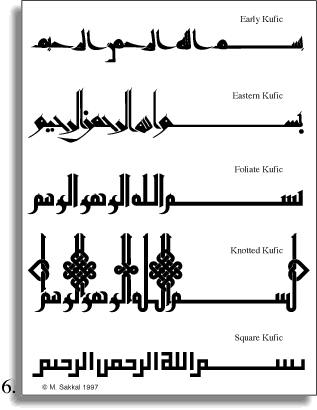
different styles of kufic (http://www.sakkal.com/ArtArabicCalligraphy.html):
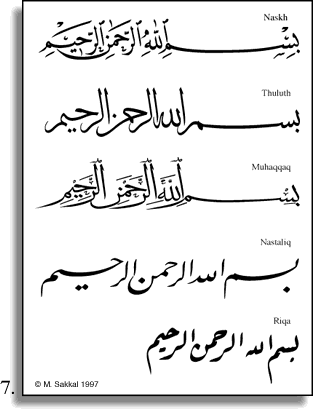
cursive styles:

- using pencil first and then the highlighters, practice writing Arabic letters using these worksheets: http://www.education.com/worksheet/article/how-to-write-arabic-calligraphy-kaf/
- using pencils and highlighters, write our names in Arabic: http://www.learnarabic.me/your-name-in-arabic/, and in different Arabic scripts: http://www.firdaous.org/write-name-arabic-calligraphy.htm
we can also translate words or phrases into Arabic and practice writing them: http://www.firdaous.org/arabic-english-free-translator-translation-phonetics.htm
- learn about kufic squares: http://www.kufic.info


- look at the work (searchable by term) of a contemporary calligraphy artist Joumana Medlej: http://majnouna.com/khatt.html; and modern examples of Arabic calligraphy logo designs: http://www.designbolts.com/2015/03/21/30-perfectly-crafted-arabic-islamic-calligraphy-logo-design-examples/
- here is an excellent tutorial on Arabic calligraphy by Joumana Medlej, including a section on square kufic: https://design.tutsplus.com/series/arabic-calligraphy-for-beginners--cms-737 (see also the author's tutorial on geometric design: https://design.tutsplus.com/series/geometric-design-for-beginners--cms-790)
- using pencil or highlighter write the phrases "peace upon you" or "thank you very much" in Arabic, and then using graph paper and highlighter copy the corresponding kufic square (http://www.shutterstock.com/pic-93737317/stock-photo-assalamualaikum-translated-as-peace-upon-you-in-arabic-square-kufi-murabba-calligraphy-style.html):

(this could make a lovely thank you card!) (http://www.dighub.net/image/a-kufi-square-(kufic-murabba-)-arabic-calligraphy-version-of-an-arabic-greeting-translated-as-thank-you-very-much--95849074.html?a=s):

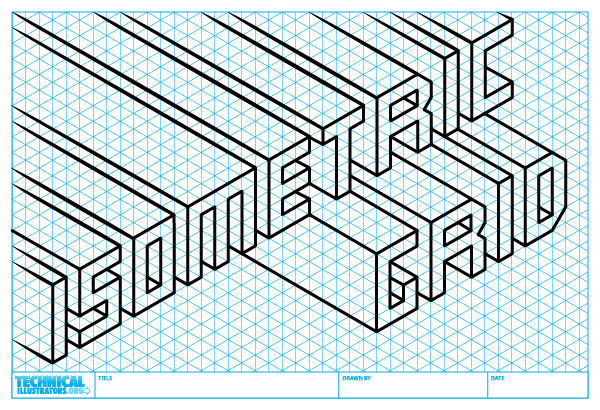
using an isometric grid (http://customgraph.com/piart.php?art=590) create a three dimensional effect with the kufic square, and add geometric decoration as in this example (https://kufilutfi.wordpress.com/2010/08/01/kufi-allah-muhammad/):

(by the way, here are some other fun things you can do with isometric graph paper)


- try to read "kufan," a kufic-inspired typeface, "kufan is a modular typeface..." (http://lccpgdesign.com/2011/content/students/lina-abdul-hadi):

the words "thank you" in English in a kufic-inspired script (from https://kufilutfi.wordpress.com/2010/01/14/thank-you/):

the English alphabet inspired by Eastern Kufic (https://www.pinterest.com/pin/501166264767597297/):

What we did
our arabic calligraphy practice:


the show-and-tells, a haiku poem:

millefiori beads:

and homemade baklava with instructional video:


No comments:
Post a Comment